
The World Doesn't Stop for Construction: How Do You Build Around an Immovable Deadline?
A school has thousands of pupils returning in September. A football stadium has its next home fixture in the diary. A hospital has patients who still need treatment while refurbishment takes place around them.
Construction may be complex. Programmes may change. Existing buildings may reveal the unexpected. But the client's world doesn't stop.
For contractors working in live and operational environments, that creates a very different programme challenge. The question isn't simply: how quickly can we complete the construction? It is: how do we deliver the construction around everything that cannot move?
At Helix CMS, we believe the answer starts by understanding the operation first and the construction programme second. That means understanding what the organisation needs to keep doing, identifying its non-negotiable dates and activities, and then building the construction programme around them.
With schools across the country regularly working to the same fixed point every year - the September return - there are few clearer examples of why that matters.

Six Weeks, One Immovable Deadline
The summer holidays give schools a valuable window for refurbishment, compliance works, repairs, fit-out and mechanical and electrical upgrades. On paper, six weeks can sound like a reasonable construction programme. In practice, it disappears quickly.
Strip-out, opening-up, installation, multiple trades, finishes, testing, commissioning, certification, snagging, cleaning and handover can all need to happen before pupils walk back through the doors. Existing buildings may reveal something unexpected. A variation may require a decision. A service may not be where historic information suggested. Materials may need changing or additional work may become necessary.
But whatever happens, September is still coming. The solution isn't simply to work faster. It's to plan differently.
Start With the Operation, Not the Build
One of the first questions we ask when planning work within an operational environment is: what does our client need to keep doing while we deliver this project?
In a school, that means understanding timetables, safeguarding, pupil movements, examinations, staff access, events and the spaces that need to stay available. In healthcare, it can mean understanding clinical pathways, patient access, infection prevention, critical services and the activity taking place immediately next to the construction area. At a sporting venue, the programme may ultimately be dictated by fixtures, events and the point at which the venue needs to become operational again.
Those are very different environments but the principle holds: the construction programme exists inside the client's operational programme, not the other way around.
Our work at South Hunsley School demonstrates this in practice. Helix has worked with The Education Alliance to deliver a £600,000 multi-phase refurbishment across a live 48-acre secondary school and sixth-form campus serving more than 3,000 students. The works have covered building fabric and joinery, mechanical upgrades, electrical and life-safety systems, access control, flooring and finishes. With elements undertaken during term time, early engagement with the school was fundamental to understanding daily schedules, logistics and pupil movement, and sequencing construction accordingly.

Work Backwards From What Cannot Move
Once the operational requirements are understood, the next step is identifying the points that cannot move and programming backwards from them.
For summer school works, that's straightforward: pupils are returning. But the date pupils return isn't really the construction completion date. Before then, systems may need to be commissioned, certification completed, defects resolved, rooms cleaned, staff given access and furniture reinstated. The building needs to be safe, compliant and genuinely ready to use.
That means working backwards again. When does commissioning need to begin? When must M&E installation therefore be complete? When do finishes need to happen? When must materials arrive? When must orders be placed? And when does the client or design team need to make key decisions?
A robust programme isn't simply a schedule telling trades when to arrive on site. It should tell the entire project team when things need to happen to protect the client's operational deadline.

Decide What Really Needs the Window
There's another important consideration, particularly in education: not everything necessarily needs to be squeezed into the summer holidays.
Good programme planning establishes what absolutely cannot happen while a building is occupied, what could happen with the right controls and segregation, and what can be phased into the organisation's normal operating calendar instead.
It's the same logic that applies wherever a "window" exists - a hospital's quieter periods, a stadium's close season - even where the practical detail looks completely different.
At South Hunsley, that meant asking the question directly: what genuinely needs the six-week window and what can be safely phased into term time instead? Framed that way, the question changes. Instead of asking "How do we fit everything into six weeks?", the better question can sometimes be: "What genuinely needs those six weeks and how do we intelligently programme everything else?"
Programme Around People, Not Just Buildings
Understanding the operation also means understanding the people affected by construction and nowhere is that clearer than in a hospital ward that never stops caring for patients.
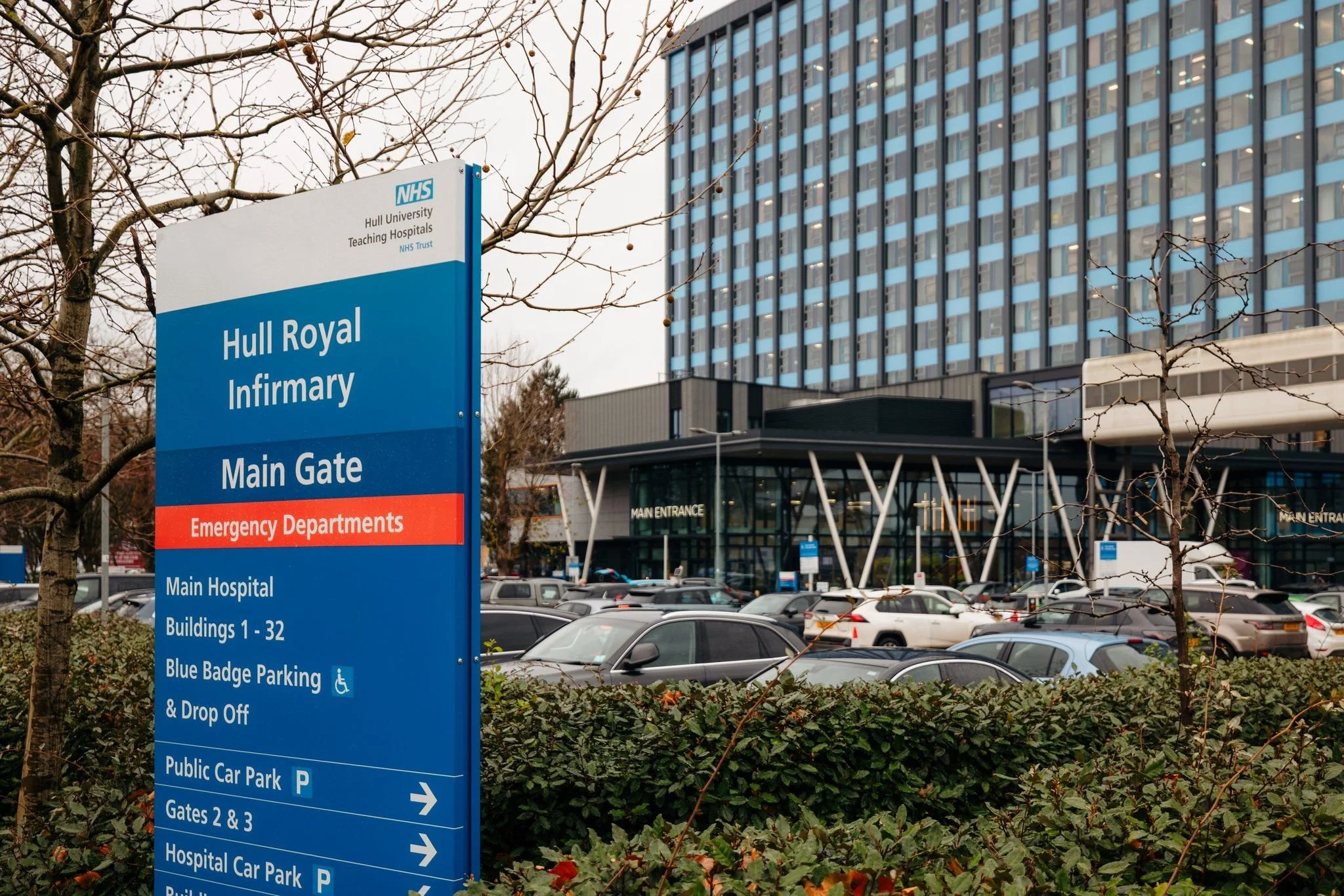
At Hull Royal Infirmary, Helix delivered the refurbishment and extension of the Neonatal Intensive Care Unit through a four-phase programme, while the ward remained fully operational throughout.
The unit continued caring for critically ill newborn and premature babies for the entire duration of the works. Essential power serving incubators, respiratory equipment and heart monitors had to stay live without interruption - which meant detailed sequencing, temporary services, infection-control measures and close coordination with NHS stakeholders at every stage.
Technically, it was a complex refurbishment and extension programme. Operationally, there was another layer entirely: work that could not, under any circumstance, put a single piece of life-critical equipment at risk.
That project reinforced something we believe applies across operational construction, whatever the sector: Buildings don't experience disruption. People do.
A programme that works perfectly on paper but fails to understand the people relying on the building isn't an effective programme.
Programme Certainty Doesn't Mean Pretending Nothing Will Change
Refurbishment also comes with uncertainty. Existing buildings don't always behave as drawings suggest. Opening up can reveal historic alterations, unexpected service routes or additional work.
Experienced construction teams don't plan on the assumption that these things won't happen. They plan so the project can respond when they do. That starts before the critical construction window, through surveys, investigations, design coordination, early procurement and supply-chain engagement.
It also means building in contingency and alternative sequencing: if one area hits an issue, can another activity progress? If more information is required, who provides it? If the design needs changing, who has the authority to decide?
The objective isn't to eliminate every unknown. It's to stop one unknown becoming a programme-wide delay.
Speed Is Often About Decisions, Not Construction

This is why partnership matters so much on fast-moving projects. Putting more operatives on site can't solve every programme problem - sometimes the biggest threat to a deadline is the gap between discovering an issue and agreeing what happens next.
The contractor, client, consultants and supply chain all need access to the right information and clear routes for decisions and escalation. Our role isn't simply to report that something has changed - it's to understand the implications, identify practical options and work with the wider project team to keep the programme moving.
That's where early relationships matter, because when an operational deadline cannot move, neither can important decisions.
Practical Completion Isn't the Real Finish Line
One of the most important principles in operational construction is understanding what "finished" actually means to the client. For the contractor, it can be tempting to think in terms of completing physical construction. For the client, that isn't enough.
A classroom needs to be ready to teach in. A hospital department needs to be ready to treat patients. A stadium needs to be ready to receive supporters.
Our approach is to work backwards from operational readiness, protecting sufficient time for commissioning, testing, certification, snagging, cleaning and handover, rather than treating those activities as something to squeeze in at the end.
Our experience delivering the £2.5m Ferriby Building at South Hunsley reinforces the same principle - the 38-week construction of a new 743sqm, two-storey teaching facility took place within the existing, operational school campus, with safeguarding, pupil and staff movement, access and the wider running of the school factored in throughout.

The World Doesn't Stop for Construction
September is a particularly timely reminder of the pressure created by an immovable deadline. But this isn't really an education challenge. It's an operational construction challenge.
A hospital cannot simply stop treating patients while refurbishment takes place. A school cannot indefinitely postpone the return of its pupils. A sporting venue has fixtures and events that construction has to accommodate. Each environment brings different risks, different people and different non-negotiables, but the approach stays consistent.
Understand the operation. Identify what cannot move. Work backwards. Decide what genuinely needs the critical construction window. Plan for uncertainty. Create fast routes for decisions. Protect commissioning and handover. Above all, work in partnership with the people who understand the environment best.
Because successful programme management in a live environment isn't about asking a client to accommodate construction.
The world doesn't - and shouldn’t - stop for construction. Our job is to make sure it doesn't have to.
If you're planning works within a live school, hospital or venue and need a delivery partner who plans around your deadline rather than in spite of it, we'd welcome the conversation. Get in touch.