
Beyond the Build: What Should Social Value Really Mean in Construction?
Social value has become an established part of construction.
It features in tenders, frameworks, procurement strategies and project reporting. Contractors are increasingly asked to demonstrate what they'll deliver beyond the bricks, mortar and physical infrastructure they've been appointed to build. That's a positive development
But as social value has become more formalised, there's a risk we lose sight of the very thing it was intended to achieve: making a genuine difference to the people and communities affected by our work. Because social value shouldn't start with a spreadsheet. It should start with a much simpler question: who is this construction project affecting and what would genuinely make a difference to them?
The Commercial Reality Can't Be Ignored
It's an important question at a time when construction budgets are under enormous pressure.
Clients, particularly across the public sector, are being asked to achieve more from limited capital budgets. Schools need essential improvements. NHS organisations need better clinical environments. Public buildings need to stay safe, compliant and fit for purpose. At the same time, labour, materials and specialist services all have a cost.
When every pound matters, it's understandable that clients want as much of their available budget as possible invested directly into the building they need. That creates an interesting challenge for our industry: how do we continue creating meaningful social value without simply creating another cost for the client?
We believe part of the answer is to stop thinking about social value as something that necessarily needs to be purchased. A construction project already brings significant resources into a community - people, expertise, skills, employment, apprenticeships, supply chains, equipment and knowledge. The opportunity is to use those resources intelligently.

Construction Takes Something From a Community
There's another side to this conversation that's particularly relevant to the environments in which Helix works. Construction is disruptive. For weeks or months, the people around our projects accommodate hoarding, deliveries, contractors, noise, temporary access arrangements and changes to their normal environment.
And when construction happens within a live building, those people don't disappear while we get on with the work.
Children still need to learn. Patients still need treatment. Healthcare professionals still need to deliver care. Parents still need to visit their babies. Staff still need to do their jobs.
We put significant effort into minimising that disruption through careful phasing, segregation, communication and project management. But we also believe there's a wider principle worth considering: if a community has to accommodate construction, construction should look for opportunities to give something back. Not because a tender document says so but because we're already there.
Start With People, Not Predetermined Activities
One of the things our projects have taught us is that meaningful social value looks different everywhere. A secondary school doesn't need the same thing as an intensive care unit. A neonatal ward doesn't need the same thing as a community organisation. And the needs of one school may be completely different from those of another.
That's why we're cautious about approaching every project with a predetermined list of social value activities. The starting point should be listening. What matters to this organisation? Who does this project affect? What challenges already exist? What could our team realistically contribute?
Sometimes the answer is relatively small. Sometimes an opportunity emerges that nobody could have predicted at the tender stage. Both can create lasting value.
When Work Experience Becomes a Career
Our work at South Hunsley School is a good example.
Alongside delivering construction projects within the live school environment, we saw an obvious opportunity: we had a live construction site filled with professions and skills that many young people had never encountered. So we opened it up.
We gave more than 360 Year 9 pupils the opportunity to visit the live site, complete a site induction, wear PPE and meet members of the Helix team, from site management through to our directors. We also ran careers activity, supported pupils with CV development and provided work-experience placements.
One of those students was Josh Ellis. Josh subsequently joined Helix as our first Construction Management Apprentice. Read more here.
That's social value in its simplest form. We didn't manufacture an activity because we needed another output to report - we had something valuable already available, a construction project and the people delivering it, and created an opportunity for young people to access it. For one of those young people, that access ultimately became the beginning of a career.

Sometimes the Need Is Right in Front of You
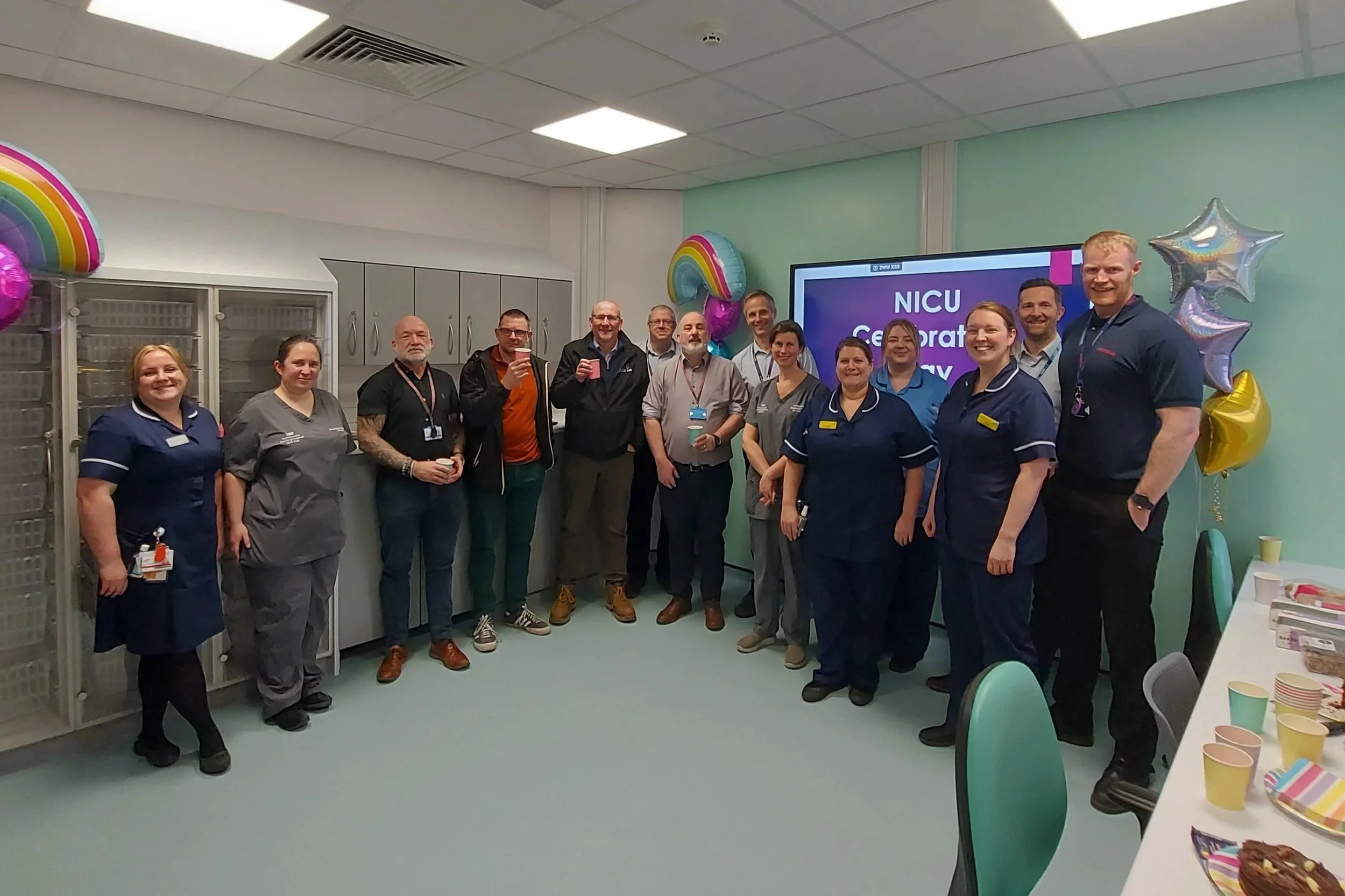
Our refurbishment of the Neonatal Intensive Care Unit at Hull Royal Infirmary was a completely different environment.
Helix delivered the four-phase refurbishment while the neonatal ward remained operational and continued caring for critically ill and premature babies. That required an exceptionally close relationship with the ward team.
Our site manager met with nursing staff every morning. Our team carefully planned works, shutdowns and noisy activities around clinical requirements. Over the course of the project, our team became part of the environment rather than simply contractors working behind the hoarding.
And through those relationships, you see things that aren't written into a construction contract. In this case, one was the parents' living room.
Families using a neonatal intensive care unit can spend an extraordinary amount of time at the hospital during an incredibly difficult period of their lives. Helix agreed to refurbish the parents' living room free of charge.
In under two weeks, the team provided improvements including new kitchen units and worktops, taps, spotlights, a hot water boiler and redecoration. The team also purchased items from the NICU Amazon Wish List, while members of the wider Helix team contributed to the ward's wellbeing activities.
None of that changed the construction programme but it changed something for the people living alongside it. And that difference is worth more than a line in a report.
Value Can Last Long After the Site Disappears
Social value doesn't always have to happen within the building either.
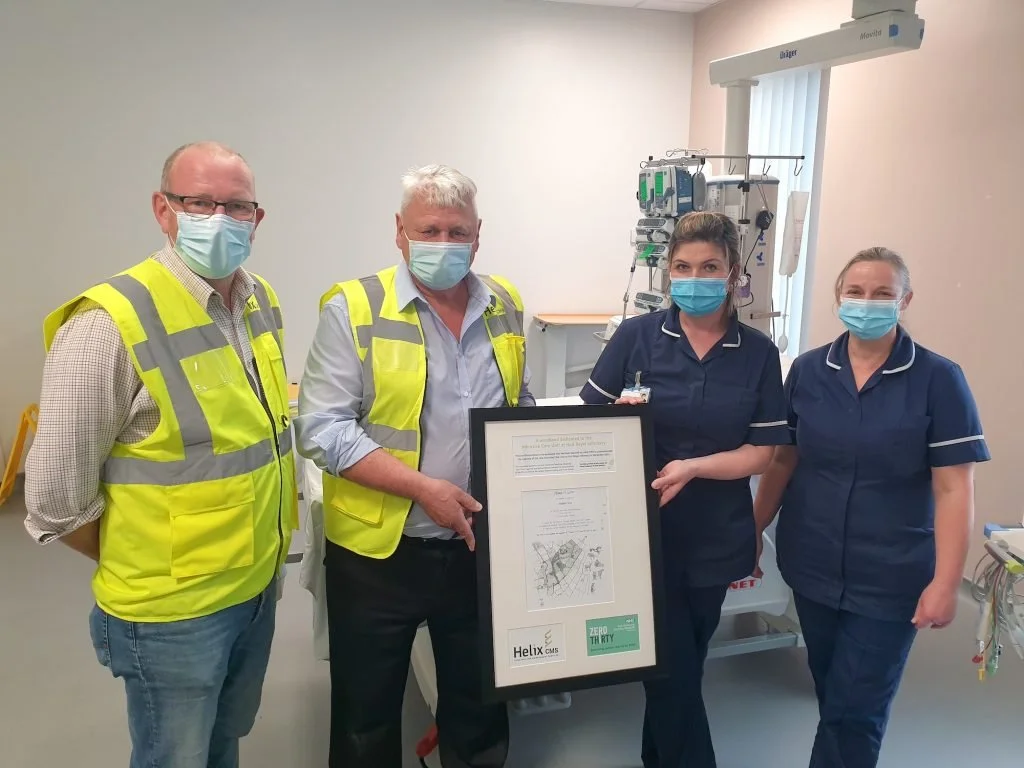
When Helix delivered the £5.6m Intensive Care Unit at Hull Royal Infirmary, sustainability formed part of the wider thinking from the outset. Alongside the energy-efficient systems built into the facility, Helix donated a dedicated woodland in Nidderdale, North Yorkshire, intended to contribute towards the sustainability of the ICU and reduce its carbon footprint over the longer term.
We've since continued that approach through environmental initiatives connected to other healthcare projects, including forest planting associated with another healthcare project.
Again, the principle is bigger than the individual initiative: a contractor's impact doesn't have to end when the hoarding comes down.
Moving Beyond the Tick Box
Measurement is important. Clients should be able to understand what contractors have committed to, whether those commitments have been delivered and what impact their investment has generated. But measurement should support social value rather than define it.
There's a danger that when the industry becomes too focused on counting activities, hours, pounds and outputs, we inadvertently incentivise the wrong question: what can we deliver that counts? Perhaps the better question is: what can we do that matters?
The two aren't mutually exclusive. We can measure outcomes while still giving project teams the freedom to respond to genuine needs. We can deliver contractual commitments while remaining alert to opportunities that emerge through relationships with clients, building users and communities. And we can demonstrate value without assuming that meaningful social value always requires the client to spend more money.
Use What Construction Already Has
Construction companies have something incredibly valuable at their disposal: capability.
We employ people with practical skills. We manage extensive local supply chains. We provide apprenticeships and employment. We understand buildings. We have access to professions young people may never otherwise encounter. We purchase huge quantities of goods and services. And our teams spend months embedded within organisations and communities.
There's enormous potential in simply asking how those existing resources could be used differently. A few hours from a site manager can introduce a classroom to construction. A work-experience placement can uncover an apprentice. A supply chain can help improve a space that wasn't included in the original project. A relationship with a local charity can connect a project to a wider community need. A construction team's practical skills can solve a problem that might otherwise remain unsolved.
None of this means working for free or absorbing unlimited additional scope - contractors are businesses too and sustainable social value has to be commercially realistic. It means recognising that value isn't always synonymous with additional spend.
Perhaps We Need a Different Measure of Success
At Helix, we're proud of the buildings we deliver. But increasingly, some of the stories we remember most aren't necessarily about the buildings.
They're about a student who came to us for work experience and stayed to begin a career. A room made more comfortable for parents spending their days beside a critically ill newborn. A relationship formed with the staff of a hospital ward. A woodland that will keep growing long after a construction project has finished.
These outcomes are very different. That's precisely the point. Social value should be specific to the people, place and project. The construction industry should absolutely continue measuring its wider contribution but we should be careful that the process of measuring social value doesn't become more important than the people it was created to benefit.
For us, the question isn't how many initiatives we can attach to a construction project. It's much simpler: while we're here, what can we genuinely make better? Perhaps that's ultimately the measure that matters most.
When the project is finished, the site compound has gone and the final account has been agreed, is something better because we were there? If the answer is yes, that's a social value worth delivering.
If you're evaluating how a contractor thinks about social value on your project, not just how they report it, we'd welcome the conversation.Get in touch.